long · braided
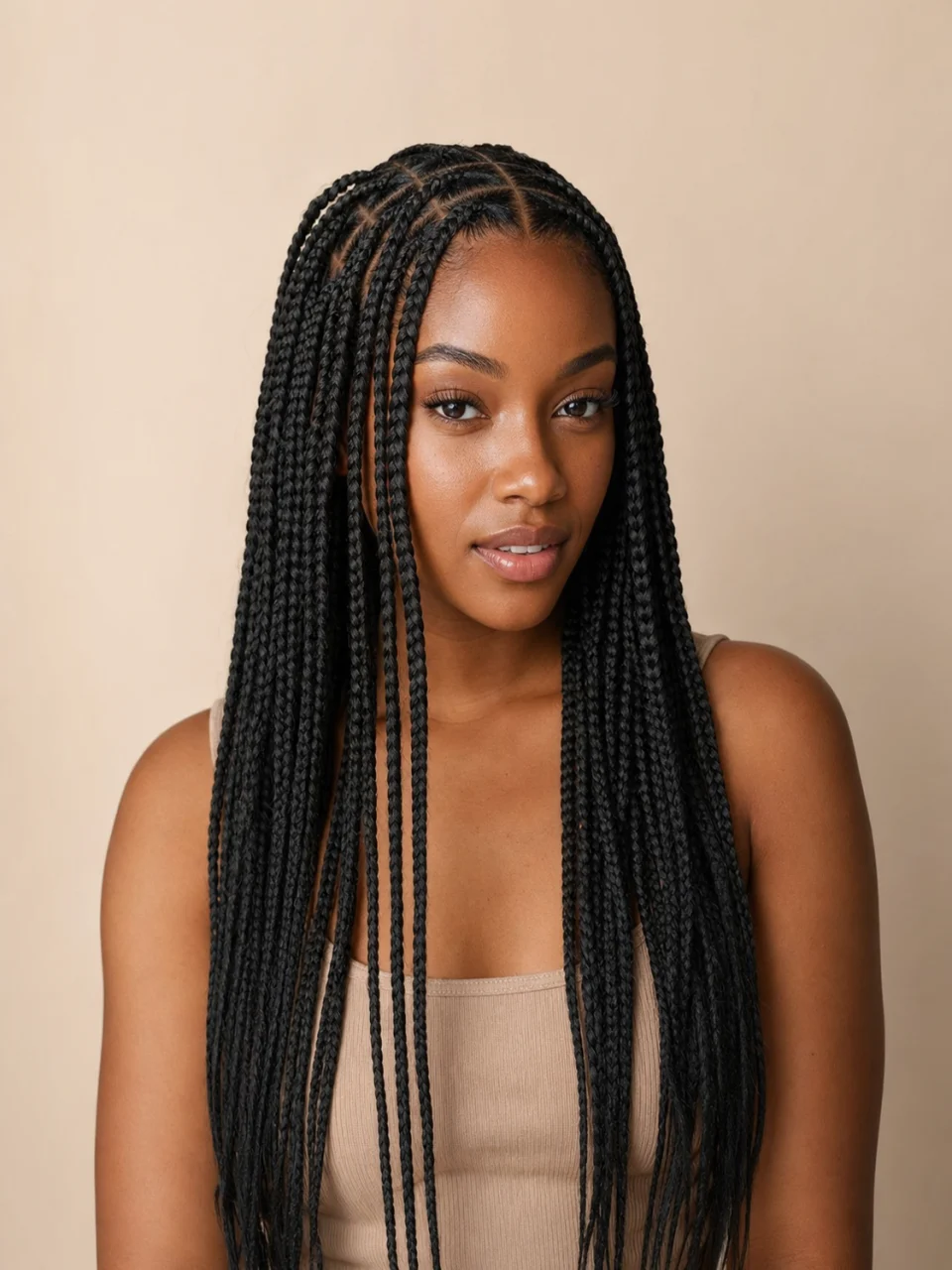
Box Braids
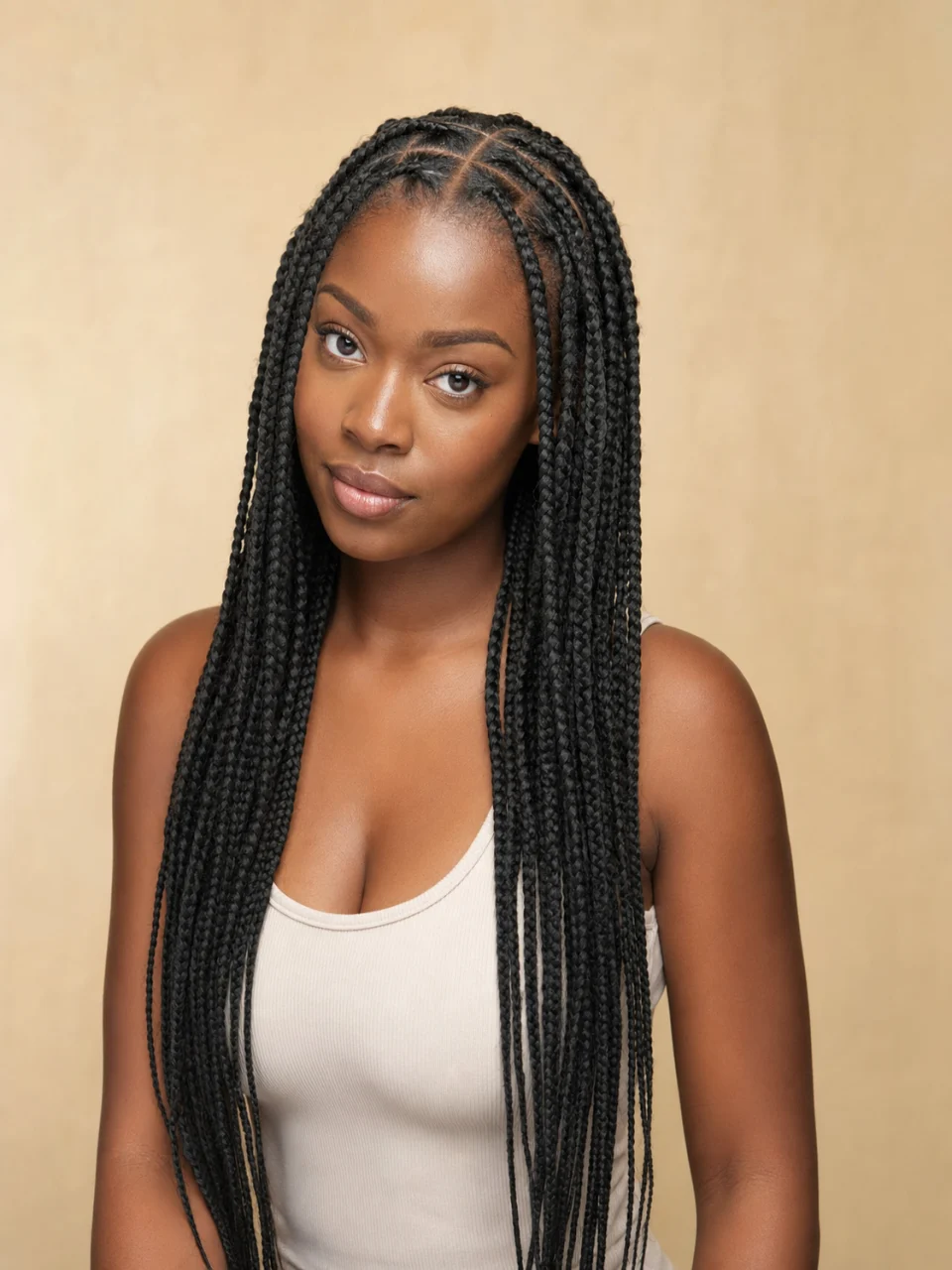
Box braids divide the hair into clean sections before forming individual braids, producing a defined pattern with substantial styling versatility.
Hairstyle guide
Explore the Knotless Braids, defined by individual braids beginning with flat natural-looking roots and gradual extension feed. Compare its shape, maintenance, salon wording, styling, and virtual try-on tips.
Published 28 July 2026
Quick answer
Knotless braids feed extension hair gradually into individual braids, producing a flatter root and flexible fall from visible sections.
The defining feature is individual braids beginning with flat natural-looking roots and gradual extension feed. That distinction is more useful than relying on the style name alone, since names can be interpreted differently between salons.
Discuss braid size, parting, extension length, colour, weight, root tension, and realistic installation time before the appointment.
Bring a saved preview and clarify which parts of the generated result matter most to you. Your stylist can translate the reference for your current hair and practical routine.
The flatter roots support several arrangements, while gentle handling and scalp comfort should guide how tightly or frequently the braids are restyled.
Maintenance labels are broad comparisons within this guide library. Your starting texture, chosen length, and preferred finish can change the real routine.
Use a photo including the shoulders to compare the braid length, density, flatter roots, and overall frame around the face.
Try the Knotless BraidsCompare nearby looks
long · braided
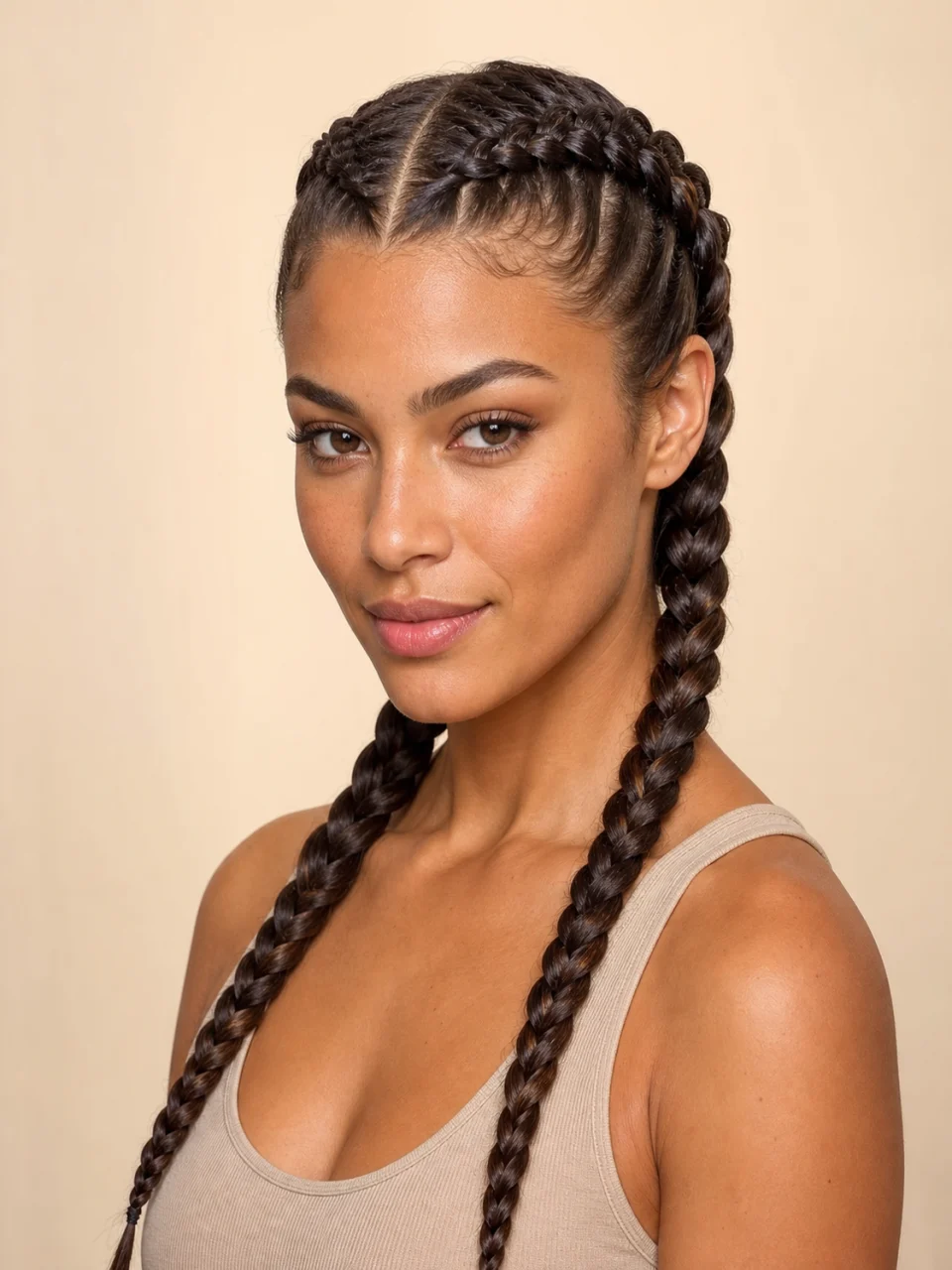
Box braids divide the hair into clean sections before forming individual braids, producing a defined pattern with substantial styling versatility.
medium · braided
Dutch braids cross sections underneath so the braid sits visibly above the scalp, commonly forming two raised rows from hairline to nape.
long · locked
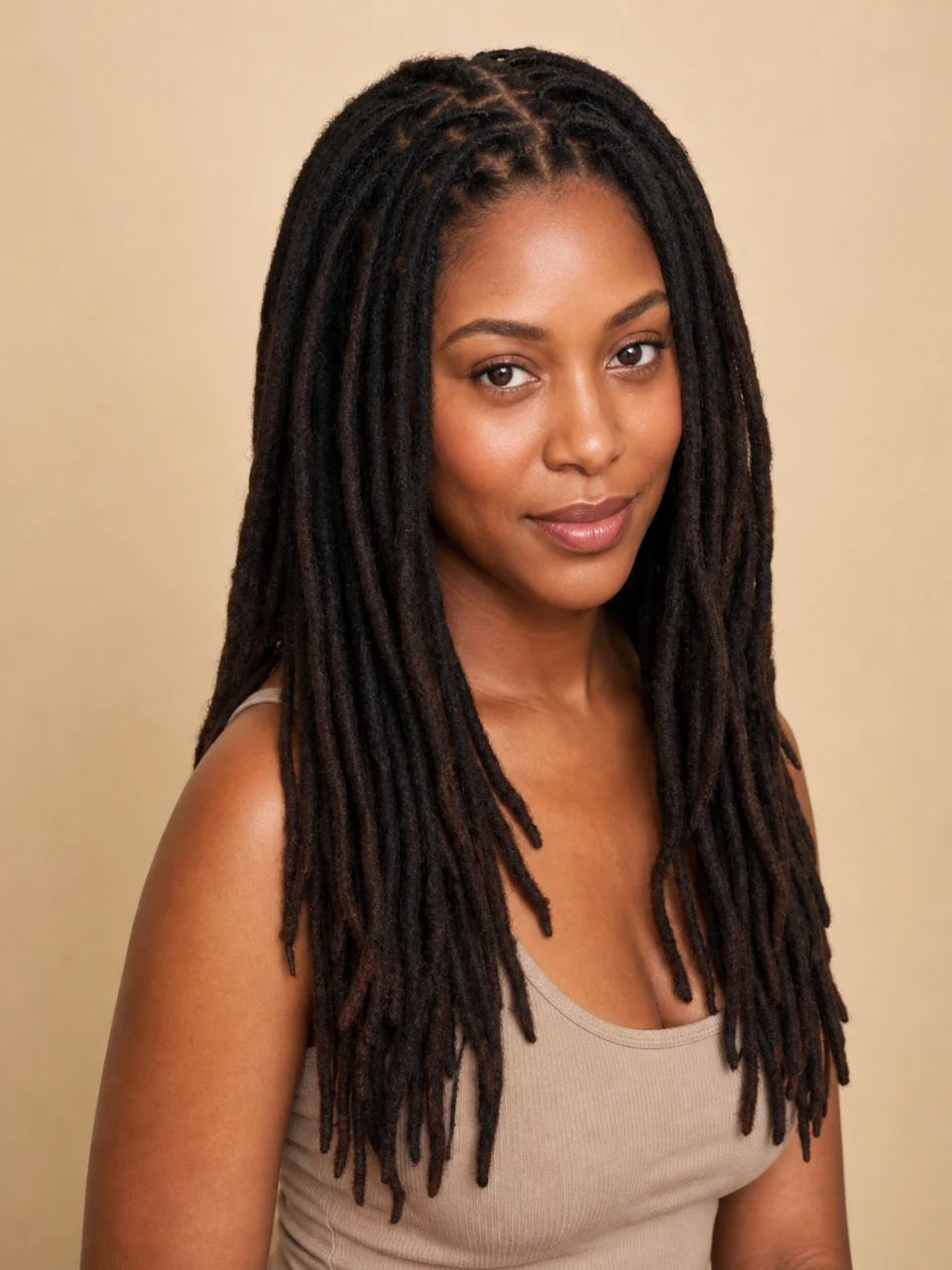
Classic locs form defined cylindrical sections that hang with individual weight and movement, creating a strong linear texture across the silhouette.
medium · twisted
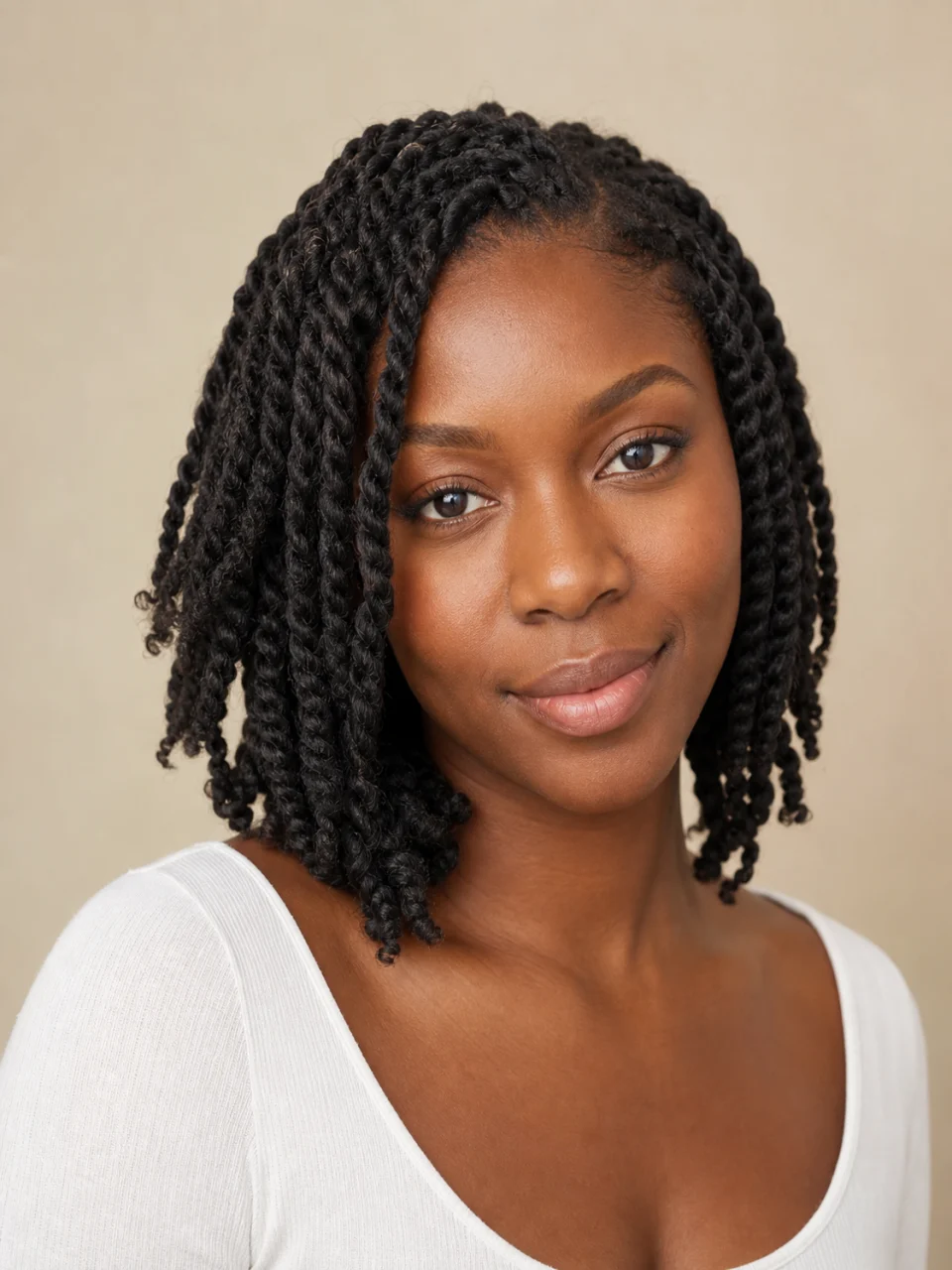
Two-strand twists wrap pairs of sections around each other, producing defined rope-like texture with more visible movement than close-to-scalp braiding.
Compare the Knotless Braids